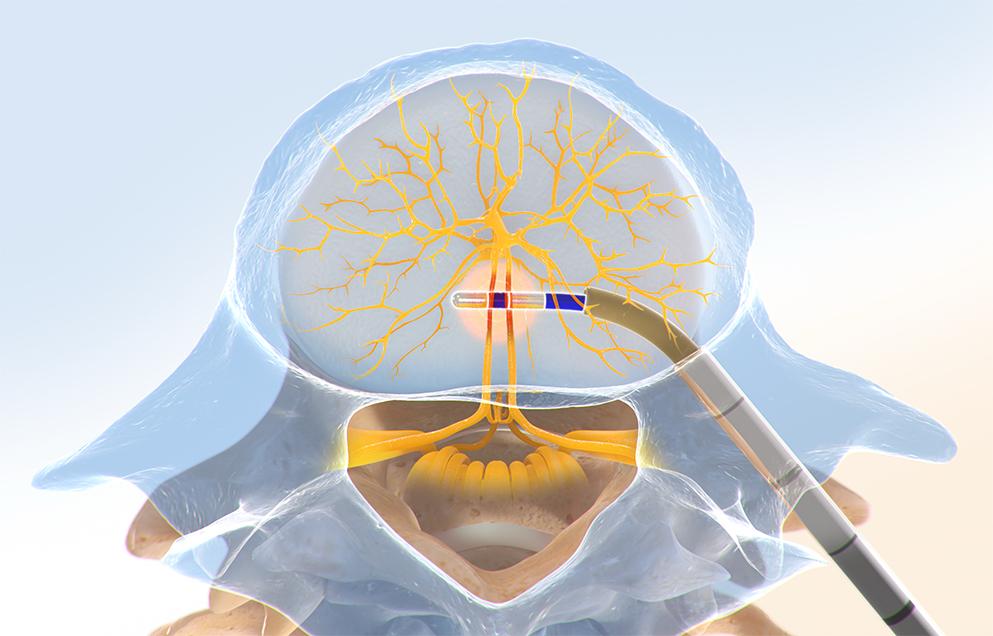
The Intracept procedure is a minimally invasive outpatient procedure used to treat chronic low back pain, specifically vertebrogenic pain, by interrupting the transmission of pain signals from the basivertebral nerve. It involves using a specialized probe to ablate the basivertebral nerve with radiofrequency heat, preventing it from sending pain signals to the brain.
Here's a more detailed breakdown:
What it is:
Intracept is a radiofrequency ablation technique that targets the basivertebral nerve within the vertebrae.
Why it's used:
It's used to treat chronic low back pain that hasn't responded to other conservative treatments and is linked to vertebral endplate damage (vertebrogenic pain).
How it works:
A small incision is made, and a probe is inserted through the vertebra to reach the basivertebral nerve.
The probe delivers radiofrequency energy, which heats the nerve, destroying it and preventing it from transmitting pain signals.
Procedure steps:
The procedure is performed under general anesthesia and typically takes about 60-90 minutes.
Benefits:
Minimally invasive, with a short recovery time (usually 1-2 weeks).
Potentially long-lasting pain relief, with some patients experiencing relief for over five years.
Can restore function and quality of life for individuals suffering from vertebrogenic pain.
Contraindications:
Intracept is not recommended for patients with severe cardiac or pulmonary compromise, or where the targeted ablation zone is too close to a sensitive structure.
Effectiveness:
Research suggests that the Intracept procedure is an effective and reliable treatment option for chronic low back pain.
Coverage:
Many insurance plans, including Medicare, cover the Intracept procedure when certain criteria are met.



 949-566-8688